
In the chaotic moments immediately following a motor vehicle collision, adrenaline floods the human body. This natural survival response frequently masks physical trauma, leading many drivers to believe they walked away completely uninjured. However, it is incredibly common to begin experiencing severe, debilitating neck pain days after a car accident.
When delayed soft-tissue injuries like whiplash, cervical strains, or herniated discs finally manifest, victims face a double crisis: managing physical rehabilitation while navigating a complex financial landscape to figure out who pays the medical bills.
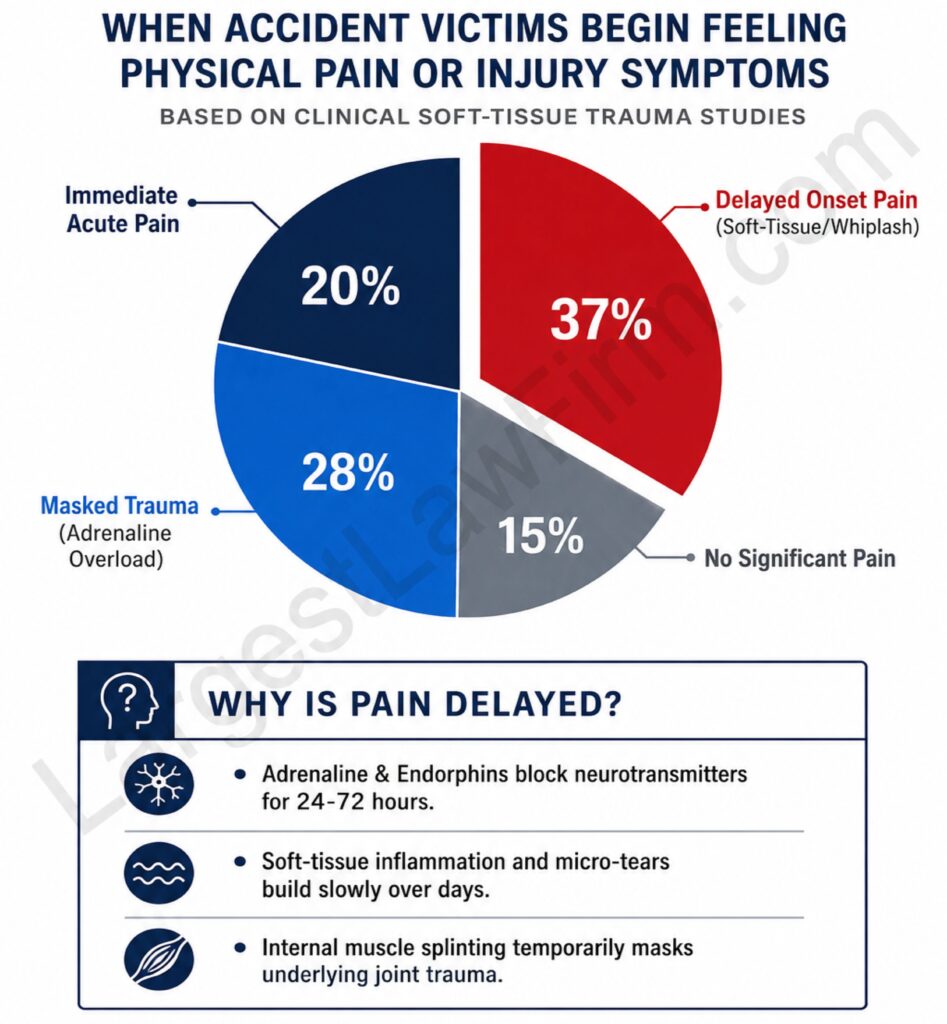
The Hidden Danger of Delayed Whiplash Injuries
Medical professionals classify delayed neck stiffness and shoulder pain as classic symptoms of whiplash. When a vehicle is rear-ended, the structural force whips the neck violently forward and backward. Because soft tissues elongate and micro-tear during the impact, inflammation builds slowly over 24 to 72 hours before actual pain centers register the damage.
Ignoring this delayed pain or delaying medical treatment is the absolute biggest mistake an accident victim can make. Insurance adjustment companies actively track the timeline of your medical treatment. If you wait weeks to visit a doctor, insurance defense lawyers will argue that your neck injury was caused by something else entirely outside of the vehicle collision.
Who Pays the Medical Bills After a Collision?
The financial framework managing your medical tracking depends entirely on whether you live in a Fault state or a No-Fault auto insurance state:
- No-Fault States (PIP Jurisdictions): If you reside in states like Florida, New York, or Michigan, your own Personal Injury Protection (PIP) auto insurance coverage automatically pays your medical bills upfront, regardless of who caused the wreck.
- At-Fault States (Tort Jurisdictions): In states like Texas or California, the at-fault driver’s insurance policy is legally responsible for your damages. However, their insurance network will not pay your medical bills as they arrive—they only issue a singular, final payout settlement package once your medical treatment is fully completed.
Why Small Local Practices Struggle Against Insurance Adjusters
Navigating delayed injury claims requires substantial investigative tracking and legal pressure. Insurance corporations routinely deny delayed neck pain claims, labeling them as “pre-existing conditions” or “fraudulent exaggerations” because the symptoms were not logged at the initial accident scene.
Fighting back against these corporate delay tactics requires matching them with heavy legal scale. Navigating these scenarios means utilizing national resource syndicates like the largest injury law firms. While a solo neighborhood attorney may lack the cash reserves to fund ongoing litigation or hire expert medical testimony to link your whiplash directly to the crash impact matrix, massive nationwide networks possess the financial muscle required to force insurance firms to settle fairly.
Disclaimer & Editorial Notice: LargestLawFirm.com is an independent digital directory, media outlet, and advertising platform. The rankings, revenue statistics, headcount estimations, and firm profiles published on this page are compiled from publicly available financial disclosures, industry legal directories, historical archives, and third-party legal market indices. While we strive to maintain complete accuracy, law firm structures, partnerships, and financial data shift frequently. All information is provided for educational and general informational purposes only and does not constitute formal legal or financial advice.
LargestLawFirm.com is not a law firm, does not provide legal representation, and the submission of information through our case evaluation forms does not establish an attorney-client relationship. If you represent a law firm listed on our platform and wish to request an administrative data update or corrections, please contact our editorial team directly.